My Dog Waiting for Me
A Quiet Moment That Stitches Well
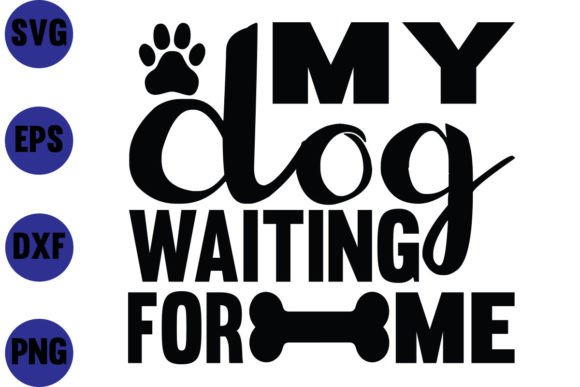
First glance at My Dog Waiting for Me tells you it’s not about flash—it’s about feeling. The composition is soft, centered, and gently asymmetrical: a seated dog in profile, head lifted, tail curled just so, one paw slightly forward like it’s holding its breath. There’s no text clutter, no forced whimsy—just quiet anticipation. As an embroidery designer who’s stitched hundreds of pet-themed pieces for Etsy sellers and boutique clients, I immediately saw this as a design that leans into emotional resonance rather than visual noise. It feels like the kind of machine embroidery design that belongs on a linen tea towel gifted to a new dog parent—or stitched onto the chest of a lightweight cotton sweatshirt for a small shop’s spring collection.
Where This Design Truly Lives
I tested My Dog Waiting for Me across three real projects: a custom embroidered tote bag for a local rescue fundraiser, a set of baby onesies for a handmade shop’s nursery line, and a series of patches for a craft fair booth. In each case, the design held up—not because it’s technically complex, but because its simplicity translates cleanly into stitch. On the tote bag (medium-weight canvas), the fill stitch areas stayed smooth and even with light tear-away stabilizer. On the onesies (60% cotton/40% polyester knit), I used cutaway + topping and got clean satin stitch definition around the dog’s outline—no puckering, no distortion. And on the patches (woven twill), the shape held crisp edges after heat-sealing and trimming.
This isn’t a design built for dense embellishment or flashy gradients. It’s a handmade product anchor—ideal for personalized gifts where warmth matters more than wow. Think: a kitchen towel for a friend who just adopted their first dog, an apron for a vet tech’s small business branding, or a pillow cover for a cozy reading nook. It also works beautifully in holiday embroidery contexts—imagine it stitched in ivory thread on oatmeal-colored flannel for a quiet Christmas gift, or scaled down for a baby’s first Easter basket.
What Demands Your Attention Before You Stitch
My Dog Waiting for Me doesn’t hide its limitations—and that’s part of its honesty. It’s not suited for tiny hoop sizes under 4×4 inches without noticeable loss of nuance, especially in the ear contour and paw definition. On highly textured fabrics like bouclé or thick terry cloth, those subtle curves can blur unless you adjust stitch density manually or add a second layer of stabilizer. And while the design avoids fine lettering or micro-details, the tail curl and eye shape rely on clean satin stitch transitions—so stretchy fabric (like ribbed knits) needs careful hooping and possibly a light fusible topping.
Dark fabric? It reads well—but only if your thread color has enough contrast. I tried navy thread on black cotton and lost definition in the lower body curve. Switching to ecru brought back the shape instantly. For commercial embroidery work, always test both light and dark fabric backgrounds using printable mockups before finalizing client approvals. And remember: this is a digital embroidery file, not an applique design—so there’s no fabric layering involved, no raw edges to manage. That makes it faster to digitize for production, but also means stitch density and underlay matter more.
Design Assets That Support Real Craft Business Needs
- Etsy sellers: Pair My Dog Waiting for Me with gentle lifestyle photography—soft natural light, neutral backdrops—and describe it as “a tender, uncluttered embroidery file for meaningful handmade products.” Customers respond to authenticity, not buzzwords.
- Small shop owners: Use it consistently across categories—tote bag design, baby embroidery, and holiday embroidery—to build visual continuity. One cohesive mood strengthens brand recognition far more than rotating trends.
- Craft fair vendors: Offer it pre-stitched on samples (pillow covers, tea towels) rather than just as a digital download. Seeing how it lands in real life builds trust faster than any description.
Stitching Clarity = Customer Trust
When a customer orders a personalized gift, they’re buying emotion—not just thread and fabric. My Dog Waiting for Me delivers that quietly. Its balanced proportions mean it scales predictably: enlarge it for a sweatshirt back, shrink it for a cap front, and it still reads as intentional, not stretched. That consistency builds professionalism. I’ve seen too many craft businesses lose repeat buyers because a design looked great on screen but felt “off” stitched—too dense, too thin, too busy. This one avoids that trap. The stitch density feels thoughtful, not aggressive. No over-stuffed fill areas. No running stitch shortcuts in places that need structure.
That clarity also supports resale value. A customer who receives a tote bag with My Dog Waiting for Me stitched neatly on the front is more likely to post it online, tag your shop, and recommend you—because it looks like something made with care, not rushed output. In a crowded market of generic graphics, that handmade presentation separates you from the algorithm-fed noise.
Before You Press Start: Five Practical Designer Notes
- Always test on scrap fabric first—especially if stitching on blends, knits, or dark substrates. What looks clean in a PNG preview may shift in thread tension.
- Review stitch density in your embroidery software. If the original file doesn’t include density settings, assume medium fill (75–85%) and adjust based on fabric weight.
- Confirm hoop size compatibility. The design’s width and height will determine whether it fits comfortably in your most-used hoops—critical for batch production.
- Inspect small details at 200% zoom in your editing software: ear tip, paw outline, tail end. These are where stitching fidelity is most visible.
- Check licensing before selling finished items or digital products. Since this is listed as a Graphics product in the Crafts category, verify whether commercial use is permitted—and whether attribution is required.
At its core, My Dog Waiting for Me is a reminder that strong embroidery design isn’t about complexity—it’s about intention. It doesn’t shout. It waits. And when stitched with attention, it rewards both maker and recipient with something quietly enduring.